
The complete guide how to choose a paramotor

Now this is a complicated task. No, paramotors are not same by far! There are big differences. We will try to give you unbiased comparison (no, the SCOUT will not always be a winner) and to give honest advice on how to choose a paramotor!
Most beginners start with the engine because it is easy to compare the numbers but this is by far not the most important thing. Experienced pilots know that there are huge differences in how the paramotor feels when you fly it. This is determined by paramotor geometry and plenty of small details, while not all of them are possible to measure.
As a beginner you may not be able to decide upon this but get different opinions. The brand your instructor is dealer of may not be always be the best for you.
It’s common to start with a beginner wing and upgrade to a faster wing in a short time; but, you can keep your paramotor for years if you choose properly.

Things you should consider when choosing a paramotor:
- How much power do you need?
- What hook-in system is best for you?
- What prop size is right for you?
- Do you need a clutch?
- Electric or manual starter?
- Is aerodynamics important?
- Strength and repairability?
- Transport and travel with your paramotor?
How to Choose a Paramotor

What is (will be) your flying style and future PPG goals?
How to choose a paramotor:
This is the crucial question, although for a beginner sometimes hard to answer. Basically there are four possible answers:
- cross country cruiser
- low-level-fun/slalom addict
- acro madman
- thermalling junkie
Cross-country cruiser — Is it the birds-eye perspective on long cross-country flights that you seek from paramotoring? Launch, gain altitude, let the brake toggles go and fly fast and far.
Or is there more to it?
Flying will never get boring, but it is natural to seek progress. It may happen that after some airtime you look for some more adrenaline. You may look for disciplines where you could learn/show more skills.
If this rings true, you will have much higher requirements on your paramotor and your priorities will change.
Here is a summary of what your priorities would be:
| Question | Cross-country cruiser | Low-level fun (slalom) addict | Acro madman | Thermalling XC pilot |
|---|---|---|---|---|
| How much power do you need? | Not much. 1.5m/s climb is sufficient |
Power is never enough! | Medium to lots! | Not much. 1.5m/s climb is sufficient |
| What hook-in system is best for you? | High hook-in is more comfortable | Medium or low for weight shift | Get low! | Get low! |
| What prop size? | Go big | Go big | Does not matter | Get the smaller one |
| Do you need a clutch? | Yes, if the cage is not strong | Yes, if the cage is not strong | Yes, if the cage is not strong | Rather not |
| Electric or manual starter? | Better to carry 2L extra fuel than electric starter | Your powerful engine will be heavy—electric start adds more weight | Whatever you like | Electric may be a better choice—but manual is good too |
| Is aerodynamics important? | Yes | No | No | A lot! |
| Strength and repariability | Depends on how often you crash | |||
| Transport and travel | Depends on your goals | |||
How much power do you need?
How to choose a paramotor:
Yes, of course it depends on your weight and glider size/type. As this is a beginner’s guide I will assume you fly a properly sized glider within its certified weight range so let's skip this for a while.
If you are muscular, you will need more power:
- Start with 15HP if you are 150lbs (70kg)
- Add 1HP for every 11lbs (5kg)
This will be enough to get you in the air. As a general rule, more power = more fun. You cannot really have too much.
Cross-country pilot:
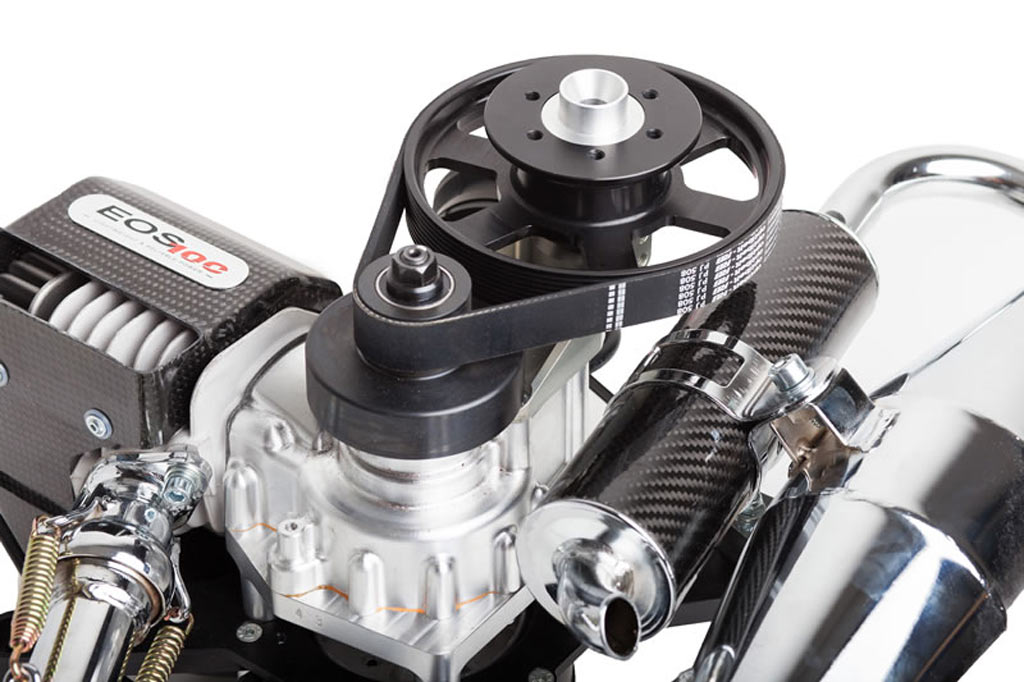
The rule above is a good guide. If you are light go for a TOP80 engine or EOS100. If your weight is around 200lbs (90kg), 20 HP would get you in the air with a sufficient safety margin for climb out. This is the minimum you need, now the question is why not have more? Having excess power has pros and cons.
| Extra Power for Cross Country Flights | |
|---|---|
| PROs | CONs |
| Shorter run on launch | More weight |
| Higher climb rate | More fuel burn |
| Possibility to fly very fast wings | Shorter capable flight time and distance |

Low-level fun / slalom addict:
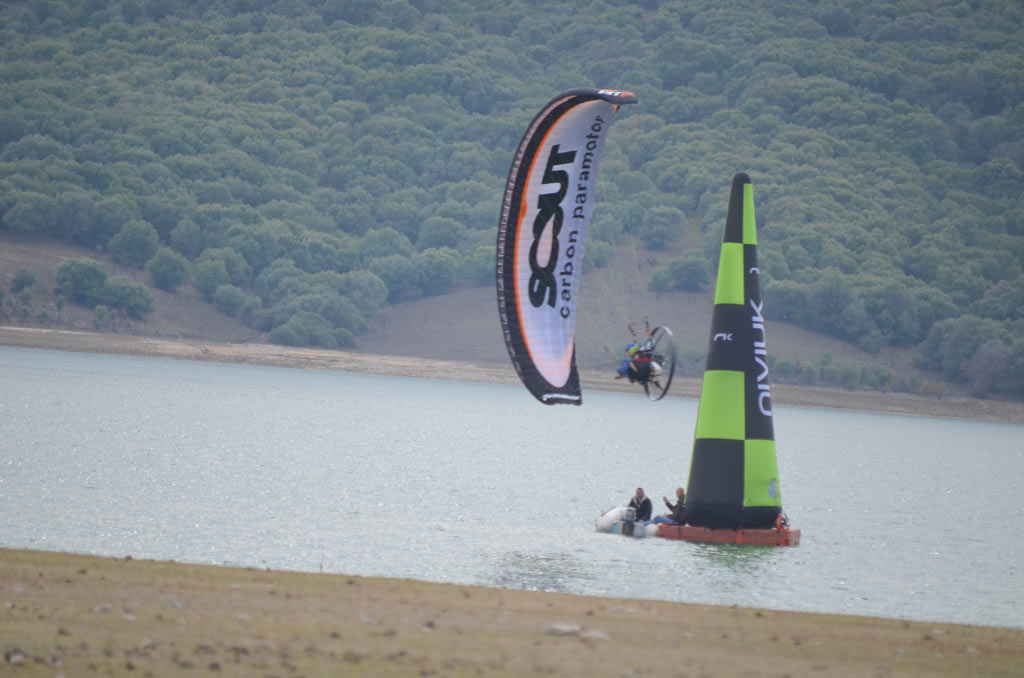
There are many reasons why you will need plenty of power. Actually, you can never have too much power in this discipline. First, small gliders are more fun so you will likely move to a smaller and smaller wing over time. You will probably fly a reflex glider that are known for lower efficiency and need more power. So if you fly a 28 sqm EN-B glider you will probably downsize to 18-20 a few years later (competition pilots fly 15-16). To fly fast you will let the trimmers up and push the speed bar. Believe me, you will need a lot of power.
Secondly, you use the power to push you around the pylon. Once you are in the turn and banked, your goal is to make the glider fly slow and push your body around as fast as possible. You want your body to overcome the glider. Glider slowed down and your body fast means small turn radius and a powerful motor will push you out of the turn more quickly. This is the moment when you fly at full power no matter how much it is.
Acro madman:
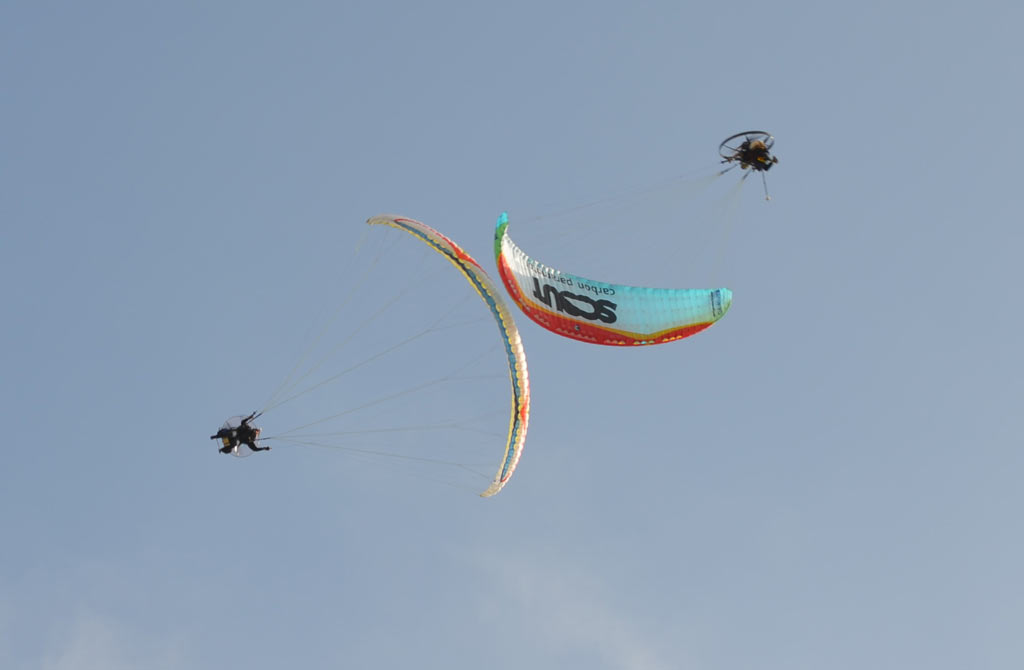
Flying acro is full of ups and downs. The downs are very fast (spiral, SAT, wingovers, …) so after a short while you will find yourself climbing back to gain altitude for the next maneuvers.
So acro pilots either fly with engine off or at full power. With a small engine, the climb will take ages.
Thermalling Cross-Country pilot:
Get a smaller/lighter engine. You only need some power at the beginning to get yourself up in the air. Then you turn it off and find the thermals.

Conclusion: More power gives you more possibilities to try disciplines other than cross-country.
What hook-in system is best for you?
How to choose a paramotor:
Hook-in system is one of the most important choices you make when buying a paramotor.
The hook-in system gives you the feel of the glider and makes handling better or bad. You may replace the motor later if you like, but its hook-in point is defined by the frame and harness. So make a proper decision now.
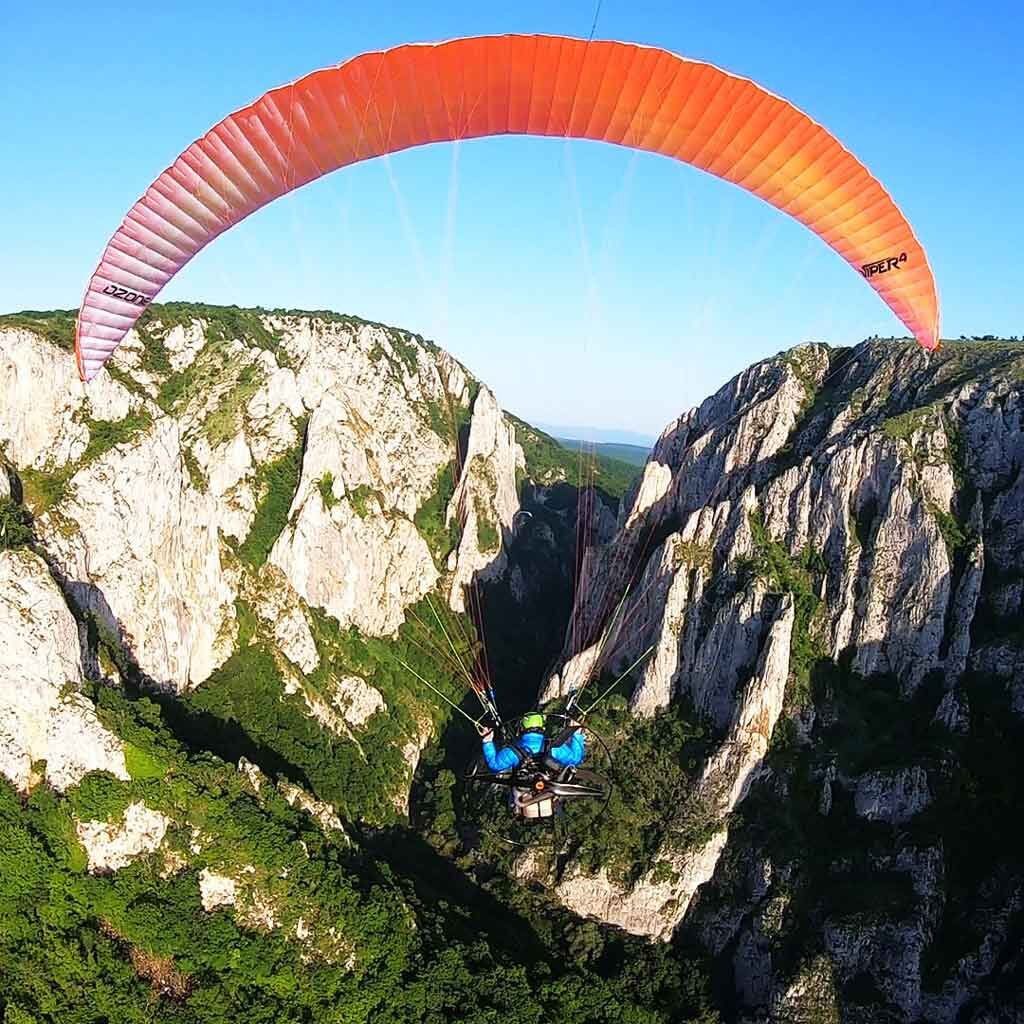
The main aspect of the hook-in system is the weigh-shift ability. This determines to what extent you can steer your glider by leaning your body to side. Those who have a free-flying paragliding background, know how valuable weight-shift is. For others, here is a simple rule:
A turn initiated with weight-shift AND brake is:
– faster and tighter: A turn initiated with weight-shift and brake is two times faster than only with brake.
– safer: For the same turn dynamics, half the brake amount is sufficient if weight-shift is added. Pulling less brake means lower risk of stalling the glider. Accidents happen often when pilots need to turn immediately after launch into the opposite direction of torque. Torque at full power is very strong and acts like weight-shift into the undesired direction. The glider is slow and in such a condition, pulling a lot of brake may cause a spin or stall at low altitude. Leaning your body would help a lot.
– more efficient: As you weight-shift and pull less brake, the profile gets less distorted. Brake-use increases drag and the glide is worsened.
– dives less: This means that the turn is more flat and you lose less altitude. Pulling hard on the brake causes not only bank but also yaw, which means the glider points down and flies toward the ground. Weigh-shift only makes the glider bank, and the turn is nice and clean.
Look, Lean, Pull
This is why every instructor in paragliding teaches students to:
- look
- lean (weight-shift)
- pull
Unfortunately, many high hook-in paramotors on the market, where you have the carabiners placed somewhere around your ears, do not allow any weight-shift. You have no place to lean to.
Click here for a complete guide to hook-in systems.
Yes, its long but worth to read.
| Question | Cross-country cruiser | Low-level fun (slalom) addict | Acro madman | Thermalling XC pilot |
|---|---|---|---|---|
| Do you need weight-shift? | Not much | Yes | Absolutely essential | Absolutely essential |
| What is the best hook-in system for you? | Gooseneck bars or high hook-in | Gooseneck bars or low hook-in | Low/hybrid gooseneck bars acceptable | Low/hybrid gooseneck bars acceptable |
Conclusion: If you're not sure, go for the goose-neck bars—you can't go wrong.
What prop size should you choose?
How to choose a paramotor:
Quick and immediate answer: go for bigger.
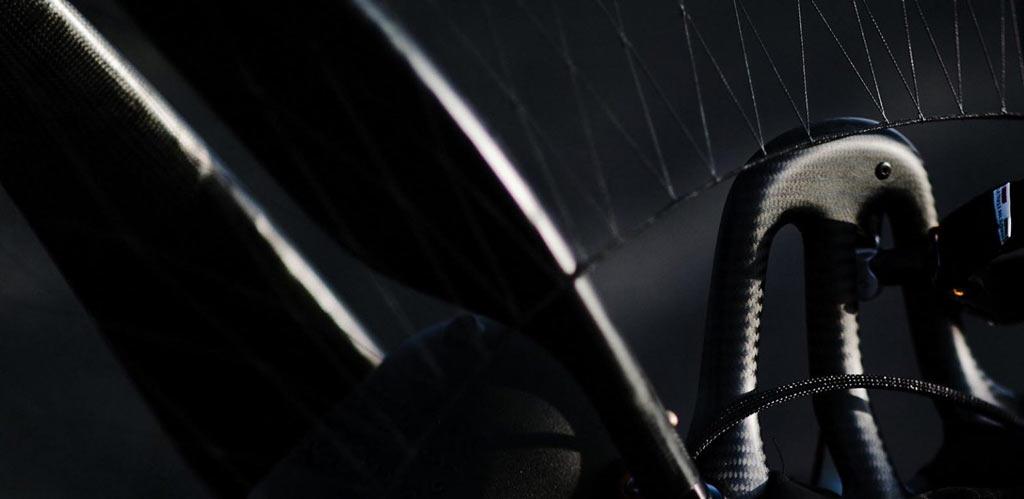
Given the same engine, large prop will have:
- slightly higher maximum thrust
- a lot more thrust in the midrange—thus better fuel economy at cruise
- less torque
Ok, but is an increase from 125 cm to 132 cm relevant? It's only 5%!
Let's consider the math and physics—simplified to make it easy.
On every prop, the middle part (about 40 cm) is not effective because:
- the profile close to the center is determined by the locking mechanism and is far from optimal.
- the speed of rotation is very low. The prop tip moves very fast, but the center does not.
- it is hidden behind the pilot.
On every prop the very end of the prop blade (about 10 cm) is not effective.
This is the place where vortices are created around propeller tips. They create most of the noise and drag—but no lift.
| Statistic | Prop Diameter (cm) | Prop Diameter (in) | ||
|---|---|---|---|---|
| Prop Diameter | 125 | 132 | 49.2 | 52.0 |
| Ineffective Center Part | 40 | 40 | 15.7 | 15.7 |
| Ineffective Tips x 2 | 20 | 20 | 7.8 | 7.8 |
| Effective Diameter | 65 | 72 | 25.6 | 28.3 |
| Thrust Percentage | 100% | 111% | 100% | 111% |
Increase in prop diameter by 5% will lead to about 10% increase in thrust.
Conclusion: Having a paramotor cage larger by 3cm (1.2in) on each side gives you a 10% gain in thrust—what a good deal!
Do you need a clutch?
How to choose a paramotor:
Many people believe that a clutch increases safety. I am not that sure.
It truly can prevent getting your lines caught into the prop when preparing to launch. This is not a dangerous accident but can damage your paramotor and probably your lines as well. The engine on idle has surprising amount of power. I have seen the lines cut through aluminum tubes like it was butter. If you had a clutch this would not happen because the prop would not spin.
It is pretty easy to prevent lines from going into your prop pre-launch: Just be careful—that's it.
Build this habit and you are safe even without clutch:
- Prepare your wing.
- Pre-heat the engine on the ground or on your back.
- Kill the engine and come to the glider and connect the carabiners.
- Turn 180 degrees to face the glider, letting the lines go around your legs. Step back and a little to the side.
- Keep the lines taut around your legs.
- Start the motor.
- With motor on idle, turn around and launch.
On the other hand, at landings a motor without clutch is an advantage. You can kill your engine a few meters above ground and land with a prop that is not spinning. Should the glider fall down on you after landing, you are safe. If you had a clutch, the prop is still spinning fast and has plenty of energy.
You will definitely need the clutch if your frame is flimsy and flexible (like Miniplane). At forward launches, especially into a little more wind, the lines put a lot of pressure on the cage and squeeze it. The cage will flex backwards and get elliptical. A prop can easily hit the cage if this happens, damaging both the cage and the prop.
Are paramotor aerodynamics important?
How to choose a paramotor:
Of course it is.
Aerodynamics is everything in aviation. Some may argue that the speeds we fly are too low to care about aerodynamic design; but this is not true at all:
- First, there are paragliders flying 50-70 km/h (30-45 mph) or even faster—and that is not slow at all!
- Secondly, airflow around the cage is even much higher because the propeller generates strong airflow.
Here is the proof: paraglider manufacturers try hard to increase the glide ratio of wings. They use unsheathed lines, calculate the minimum thickness of lines to maintain adequate strength, and make 3-liner and 2-liner paragliders.
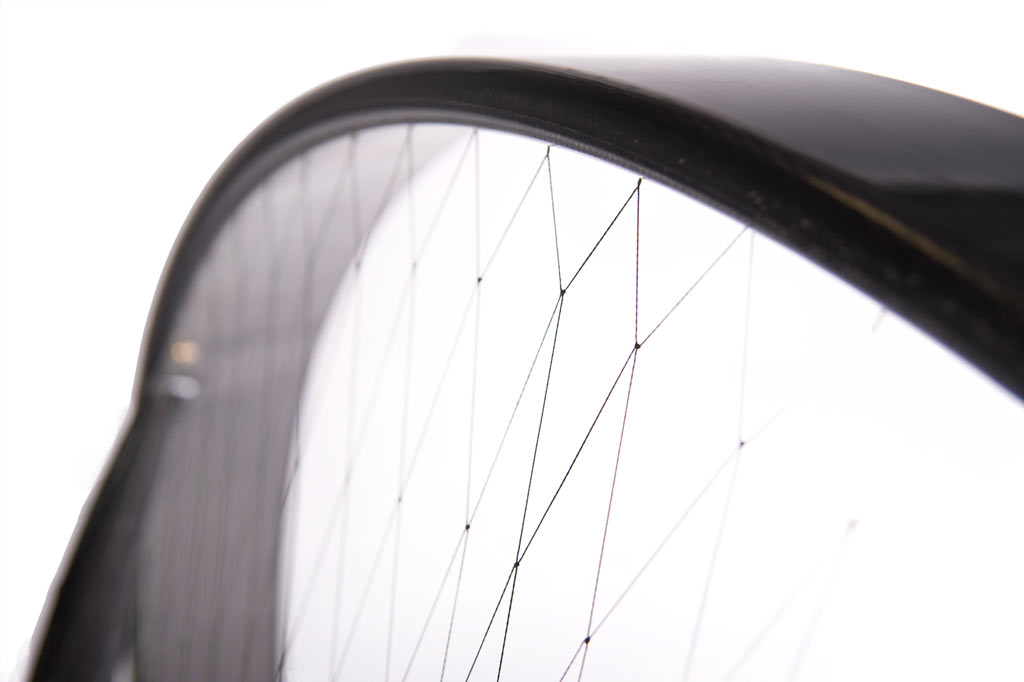
Aerodynamics is not only about using airfoil profiles on the cage like on the SCOUT. Even some classic "tube" paramotors are better than others.
These are the things that cause drag:
- Lots of tubes: Some paramotors have double-hoops and lots of tubes in the cage. This makes them stronger, but introduces a lot of drag.
- Thick netting: A netting made from thick line will obviously have a lot more drag.
- Strap around netting: Some paramotors have a wide strap sewed onto the edge of the netting. Not very aerodynamic!
- Fuel tank well below the pilot: A fuel tank exposed to the airflow is a very bad solution in terms of aerodynamics. A good paramotor design places the tank nicely behind the pilot.
Who should care about aerodynamics?
| Question | Cross-country cruiser | Low-level fun (slalom) addict | Acro madman | Thermalling XC pilot |
|---|---|---|---|---|
| Is aerodynamics important? | Absolutely | Yes | Nope | Very much |
Should you get an electric starter or manual pull-starter?
How to choose a paramotor:
Warning: I will be biased on this topic. I have back pain and I try to save every kilogram possible. Electric starter is about 1.5-2kg (3-5lbs) more and I believe they do not add value.
Cross-country cruiser:
You will probably end up with a small motor (80-130cc) and these are easy to start. So, saving those 2kg of electric starter will allow you to take 2.5 L more fuel. So, I would rather have slightly less comfort at the start and gain almost one hour more airtime. Besides, most of the small engines are not even available with electric start so your dilemma is solved.
Low-level fun/slalom addict:
You will need a powerful motor and your paramotor will be heavy. So add the electric only if it is very hard to start manually. I would say anything up to 200cc is OK to start manually. Larger motors would need electric.
Acro madman:
Acro pilots tend to turn their engine off for their stunts. Even if they do not, sometimes the engines stops itself. Engines with no clutch rotate at idle. During SAT maneuver the pilot and paramotor actually fly backwards and backward airflow brakes the prop and may stall the engine. In such cases the pilot may need to restart the engine quickly. Having a button to engage an electric starter is handy.
Thermalling:
For thermalling, it does not really make a difference. Maybe having an electric starter would be better—as after a long flight with motor off, the engine cools down and is harder to start. But once fuel evaporates from your carburetor after long flight, you may not be able to restart the engine either. On the other hand, for thermalling, a small engine is perfectly sufficient and these come with manual starters anyway so your dilemma is solved. These engines usually have choke so you could assemble a wire to operate it in flight and you could restart your engine easily even after longer period.
Conclusion:
| Question | Cross-country cruiser | Low-level fun (slalom) addict | Acro madman | Thermalling XC pilot |
|---|---|---|---|---|
| Electric or manual/dual starter? | Small engine with manual starter | Whatever | Prefer electric | Small engine with manual starter |
Strength and repairability
How to choose a paramotor:
Strength
It is always good to have it strong enough for safe forward launches. With a flexible cage, it is very easy to make a mistake during launch and break the prop and/or cage. Most paramotors will do the job. One step further is resistance to small slips at landings.
It is good if the paramotor can resist that because everyone will have such "accident" from time to time. It is not dangerous but it will cost you a new prop and frame parts. It is always a trade-off for weight. A Walkerjet or a Parajet Volution might be strong but they are a lot heavier, too. No paramotor can resist a crash. But its OK. They are made for flying, not crashing.
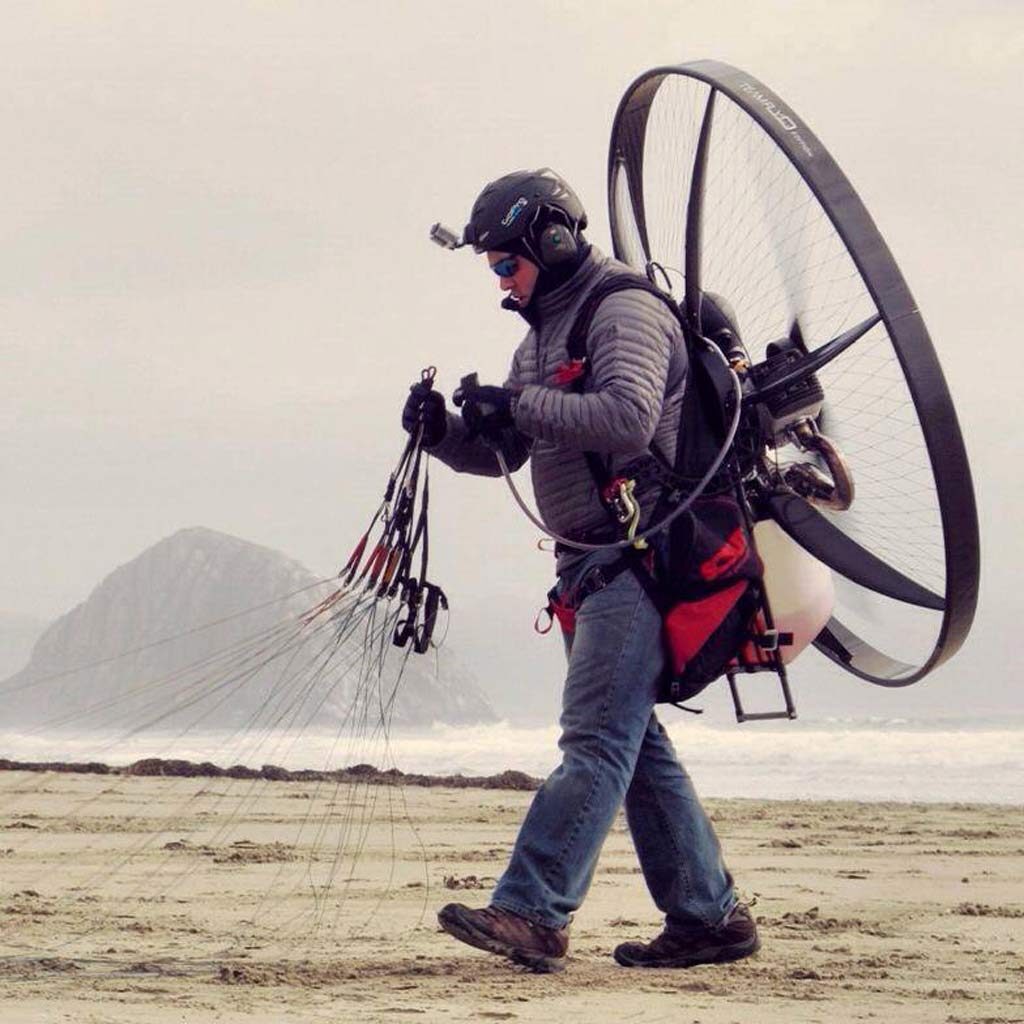
For every increase of strength you pay with extra weight.
So its about setting your priorities and finding your compromises.
Repairability
It depends. An aluminium frame is easy to repair if you have the tools and skills. Most people do not. You can find someone to repair your broken cage but it may take more time and money to let someone do the custom work than order new parts. It of course depends on availability of spare parts and reliability of your manufacturer. Keep in mind that the most expensive thing on a broken paramotor is when it is good weather and you are grounded. So if spare parts are not available quickly and the manufacturer is not responsive, you may find yourself to miss the flying season.
Conslusion
When I look at the new modern paramotors coming out lately (Parajet Zenith, Nirvana Instinct, SCOUT carbon, …) the trend is obvious: paramotors are made for flying not crashing. If you break it, replace the broken part and get into the air as soon as possible.
A note on SCOUT: It is actually very easy to DIY repair composite parts and necessary material and tools are available—but I guess it would just look ugly on the sexy paramotor. You would not weld your bumper on your Ferrari either, would you?
Transport and travel with your paramotor
How to choose a paramotor:
Will you be able to transport your paramotor assembled on a hitch rack or truck? If so, life is easy and you do not care about how easy or difficult it is to disassemble.
Although, we do recommend the SCOUT Beef Tubes if you are using a hitch rack.
If you need to disassemble your paramotor, how small does it need to be?
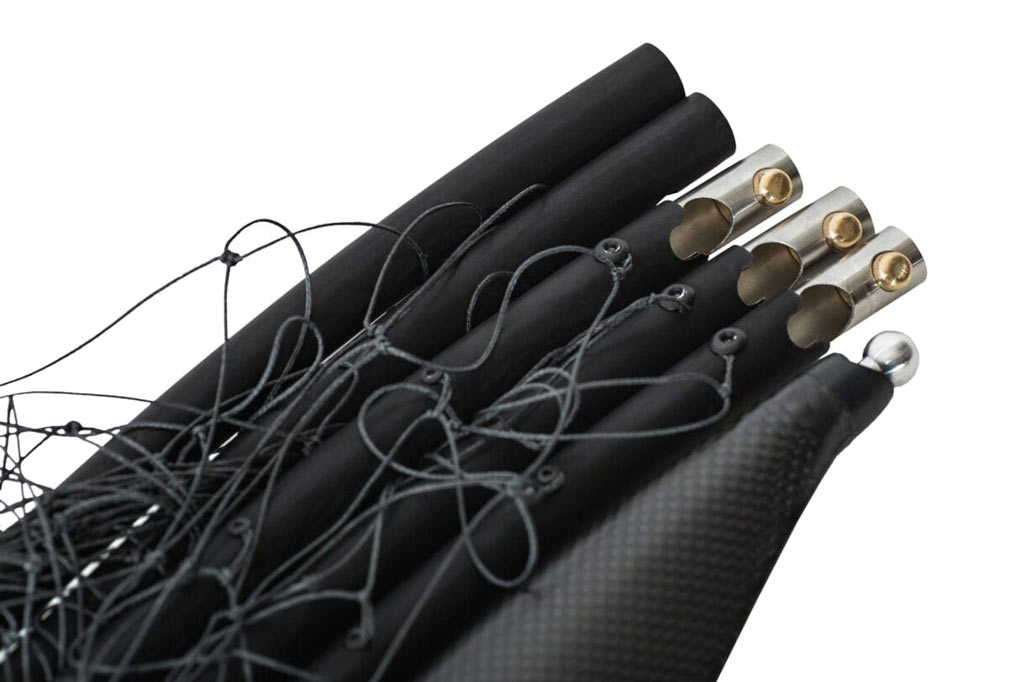
If you have a van, then a cage consisting of 3 or 4 parts will fit easily. The advantage is that such a cage is assembled faster.
But it is not only about the cage! Have a look at how bulky the main frame is? How big is the main body of the paramotor with engine, tank and harness? Is it possible to rotate the goose-neck bars all the way down to make the harness flat?
If you have a small car you will need a paramotor that breaks down into small parts like a SCOUT. Of course, it takes some time to assemble and disassemble; but, once you have it down, you only need about 10 minutes.
If you found everything you needed, check our YOUTUBE channel.
or
Click here to find a dealer and flight training.